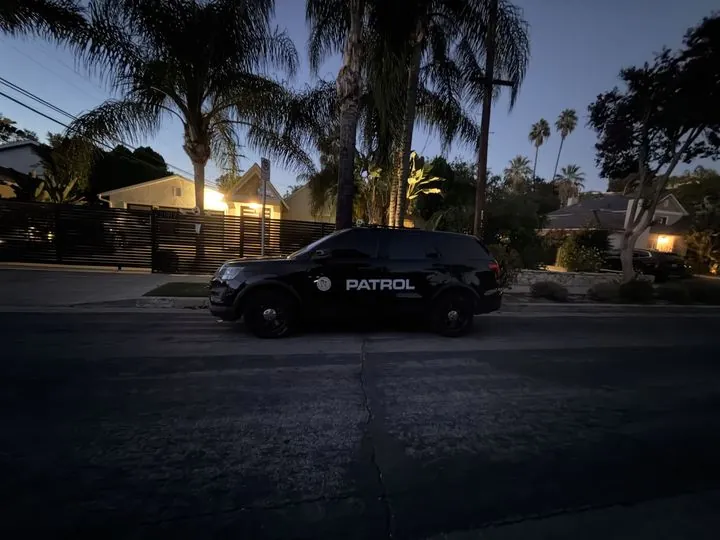

An office building or business park is busy for about ten hours a day and quiet for the rest. During the day the questions are about people: who walks into the lobby, who gets upstairs, who handles the delivery driver who wants to leave a pallet by the elevator. After hours, the questions shift to the parking structure, the loading dock, the back doors and the stretch of landscaping nobody looks at.
That split is why commercial security for office properties is rarely one thing. This guide walks property managers and building owners in Pasadena, Burbank, Santa Monica, Woodland Hills and the rest of Los Angeles County through how to think about coverage, what each option does well, and what to send a provider when you ask for a proposal.
Start with a walk, not a vendor
The most useful thing a manager can do before calling anyone is walk the property at three different times: a weekday morning, a weekday evening around closing, and late at night. Write down what you see. Patterns show up fast:
- Lobby and front desk. Do visitors check in, or do people walk straight to the elevators behind someone with a badge? Is the desk staffed at the hours tenants arrive?
- Parking structure and surface lots. Where are the dark corners, broken lights and stairwells? Where do tenants complain about car break-ins or people sleeping?
- Loading dock and service doors. Are doors propped open for deliveries and left that way? Who checks them at the end of the day?
- Perimeter and landscaping. Gaps in fencing, unlit walkways, trash enclosures and the side of the building that faces an alley or a freeway on-ramp.
Pair your notes with what tenants and the building engineer already know. A short list like "trespassing in the P2 stairwell after 9 PM, two catalytic converter thefts in the surface lot this quarter, lobby door held open during move-ins" gives a security provider something real to plan around. LDG begins every commercial engagement the same way: evaluating the property, identifying the risks and recommending practical options that fit how the building runs and the budget.
The main options for an office property
A lobby or front desk officer
For multi-tenant buildings, the most visible piece of security is often a person at the front desk. An unarmed officer handles visitor check-in and access control, helps tenants and guests, keeps an eye on entrances and parking areas, and documents incidents so management knows what happened.
A desk officer makes the most sense when the building has a steady stream of visitors, couriers and contractors, or when tenants expect a professional first impression when they walk in.
After-hours mobile patrol
Once tenants go home, a full-time post may be more than the property needs. With mobile patrol, marked LDG units visit on a schedule, at randomized times, or both. A visit can include perimeter, gate and door checks, parking lot and common area sweeps, checks for trespassing, loitering and vandalism, and an incident report afterward.
Randomized timing matters for office parks. If a patrol always arrives at 11 PM, anyone watching the lot learns that by the second week.
Armed coverage for specific situations
Most office buildings run with unarmed officers. Some situations call for a conversation about armed security, such as a higher-risk tenant, a property with a history of serious incidents, or a period of elevated concern. That decision belongs in the site assessment, not in the first phone call.
Remotely viewed cameras and the AI vehicle
Large surface lots and business parks with several buildings are hard to cover on foot. The AI Vehicle Surveillance Program puts a clearly marked LDG vehicle on site with four AI cameras and 360° coverage, viewed live and remotely by LDG, with a siren, warning lights and two-way talk. It runs unmanned, and an LDG patrol officer can be added when you want someone on the ground.
For fixed systems, LDG works through strategic partners on cameras, LPR cameras, access control, alarm integration and remote monitoring under security technology. Cameras work best alongside people: a camera that is viewed live can spot something worth checking, and an officer or patrol is who goes and looks.
Putting it together
Many office properties end up with a mix, for example a lobby officer during business hours, randomized patrol visits overnight and on weekends, and a camera vehicle in the lot that has had the most break-ins. Coverage can scale from a single officer at one building to a program across several locations.
What to include when you request a proposal
These details help LDG build an accurate plan and quote:
- The property. Number of buildings and floors, tenant count, parking structures and lots, loading areas.
- The problems. The specific incidents from your walk and tenant reports, with times when you have them.
- The hours. Business hours, after-hours, weekends, holidays, and any events or move-in days.
- What already exists. Card access, cameras, lighting, a current security vendor, and what you want to change.
What it costs
Rates depend on the location, schedule, contract length and post requirements. LDG publishes typical ranges on its rates page: unarmed and armed security guards at $40–$60 an hour, off-duty police officers at $80–$100 an hour, and the AI Vehicle Surveillance Program at $1,500–$6,000 a month. Longer service agreements bring rates down, requests with less than 7 days' notice carry an upcharge, and every quote is confirmed before service.
Office security around Los Angeles County
Each area has its own mix of buildings. In Pasadena and San Marino, it is often older mid-rise offices and medical buildings near busy corridors. In Santa Monica, creative offices with open lobbies and shared parking. In Woodland Hills, larger office campuses with big surface lots. Burbank and Studio City have studio-adjacent offices and production space, and Encino and Sherman Oaks have Ventura Boulevard towers with shared garages. LDG serves properties across Los Angeles County.
If you manage an office building or business park and want a second set of eyes on it, request a consultation or call or text (442) 288-6642. You can also tap Chat now and tell us about the property.
Frequently asked questions
Does an office building need a full-time security guard?
Not always. Some buildings need a lobby officer during business hours; others are well served by randomized patrol visits after hours. LDG recommends a mix based on the property, the problems and the budget.
Can LDG cover more than one building or location?
Yes. LDG provides everything from a single officer to a security program across multiple locations.
How much does security for an office property cost?
Typical ranges are on the rates page: $40–$60 an hour for unarmed or armed guards and $80–$100 an hour for off-duty police officers. Rates vary, longer agreements cost less, and every quote is confirmed before service.
Can cameras replace a guard at night?
Cameras extend coverage, especially in large lots. The AI Vehicle Surveillance Program is viewed live and remotely by LDG, and many properties pair it with patrol visits so a person can respond on site.
What should I send to get an accurate quote?
The property size and layout, the incidents you are seeing, the hours you need covered and what security you already have in place.